From e-dec to Passar: Why Swiss customs does not have to be scary

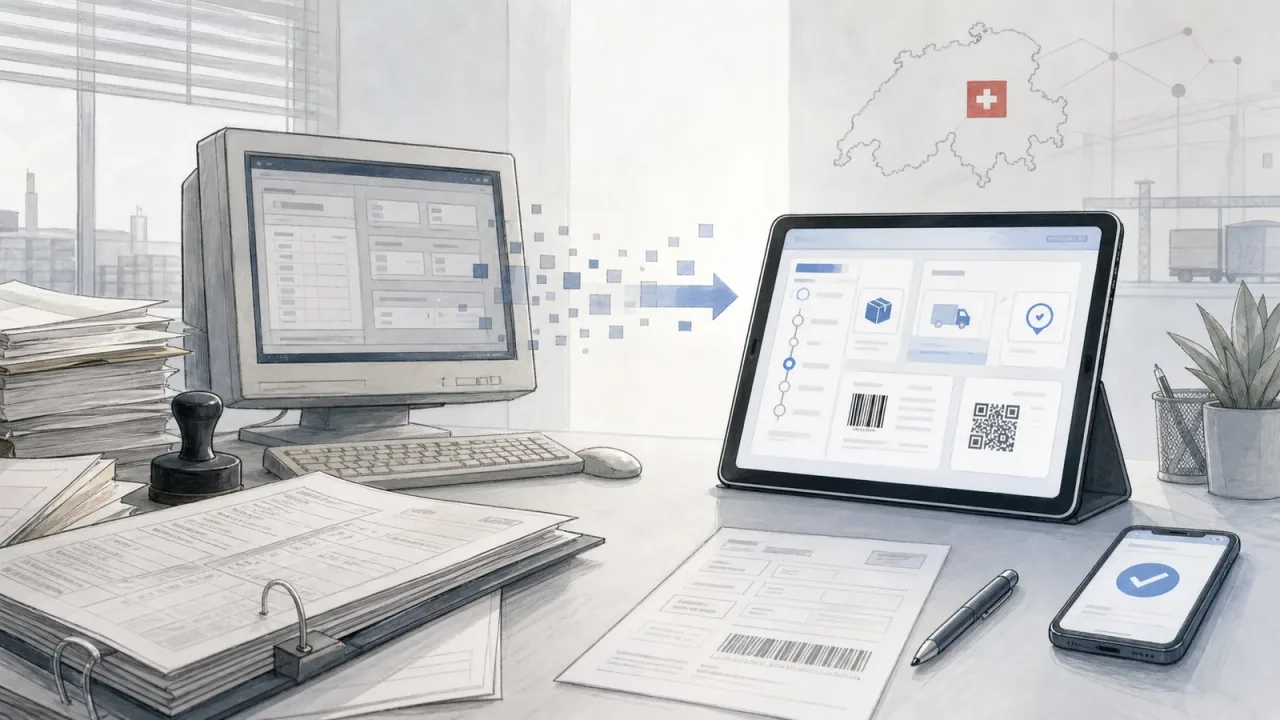
Anyone involved in cross-border trade with Switzerland has been hearing one word again and again for months: Passar. The new goods traffic system from the Federal Office for Customs and Border Security (FOCBS) sits at the heart of the DaziT digitalization program. The goal sounds like music to the ears of tired logistics teams: end-to-end digitalization, leaner processes, and faster border crossings.
But as with many large public-sector projects, there is often a rocky road between theory and practice. While some companies are still breathing a sigh of relief because the export migration is finally done, the next wave is already approaching on the import side.
So where do things stand right now? Let us look at it pragmatically, without customs jargon.
Export: The plaster is off
First, a quick look back. The switch for transit and export, known in the terminology as Passar 1.0, cost the industry plenty of nerves. Originally, everything was supposed to move faster. Then came delays, technical stumbling blocks, and finally an extension of the parallel operation period.
But since January 1, 2026, e-dec Export is over for good. The plaster is off, and the old system has been switched off.
How is it working in practice? For many companies, the first weeks were a bumpy cold start. Software updates had to take effect, customs master data had to be maintained correctly in the new customs customer administration system, and teams had to learn how to work with the new Digital Transport Slip (DTS) instead of the old paper-based routines.
By now, however, one thing is clear: companies that did their homework and have capable customs software behind them are benefiting. The automatic authorization check works, and goods declarations can be corrected more flexibly before activation than before. Export is running. The first hurdle has been cleared.
Import: Passar 2.0 is already casting its shadow
Anyone thinking, "Great, topic closed, we can relax again," is unfortunately wrong. While export has made it across the stage, the real heavyweight is still waiting on the ramp: import, meaning e-dec Import.
FOCBS deliberately moved the start of Passar 2.0 for imports somewhat further back so that lessons from the export migration could feed into the rollout. That was a wise decision, because import is usually much more complex. Think of different duties and taxes, customs warehouses, import permits, and country-specific details.
Here is the roadmap you need to keep in view:
- Now, in the second quarter of 2026: The pilot and pre-production phase is starting. Initial companies and freight forwarders are testing Passar 2.0 in selected domicile processes and at initial border crossings. According to the current roadmap, official parallel operation with e-dec Import has begun.
- The coming months: The focus is onboarding, testing, and software integration.
- March 31, 2027: This is the key deadline. Under the current plan, March 31, 2027 is the final day for e-dec Import. From the following day, Swiss import customs clearance will no longer work without Passar.
The best IT setup will not get you across the border if the digital identity is missing.
What actually changes for imports?
Passar is not just a new design for old input screens. The logic behind the process changes.
Previously, customs declarations and the actual transport were often treated as clearly separate worlds. Passar brings these worlds closer together. The key element is the transport declaration. In practice, this means that the goods declaration is finally activated at the border through the transport declaration.
In the ideal case, the truck rolls across the border without an administrative stop because the risk analysis has already run automatically in the background and given the green light. The driver uses the ACTIV app and receives the signal that the truck has been released. That allows the vehicle to pass the Swiss customs crossing without stopping.
Passar Import should also make it easier to change declarations before arrival at the border. Until the goods are actually activated at the border, errors in the declaration can be corrected more easily and documents can be withdrawn. That saves time and avoids many of the tedious correction requests that used to follow later.

Our conclusion: Homework number one is business partner IDs
If the export migration taught us anything, it is this: companies that postpone the basics end up under serious pressure. In mid-2025, many exporters left the migration on the back burner for too long, which created real stress in the autumn.
So what should you do now? Installing software updates or planning team training can wait a little until the dust from the current pilot phase has settled. But there is one fundamental task you should tackle right now: the business partner IDs in the FOCBS ePortal.
In the new Passar world, nothing works without these IDs. The days of getting by with provisional workarounds are over. Every actor in the supply chain needs clean registration in the ePortal. Both the UID and ZAZ number lose their role and are replaced by the business partner ID.
Our clear recommendation for the coming weeks:
Clean up your master data. Make sure that you, and ideally your most important import customers and partners, are properly registered in the FOCBS ePortal and that the relevant business partner IDs have been generated. Check whether the links and roles are correct.
In short: the best IT setup will not get you across the border if the digital identity is missing. Make master data maintenance in the ePortal your first official task for Passar 2.0. Companies that tick this box early remove pressure immediately and will not have to worry in spring 2027 that a supply chain fails because one number is missing.
More articles
Calculating customs value
Freight costs, free goods, and the Passar border value explained
July 16, 20267 min read

Swiss transit to Italy
Prepare T2, MRN, and the Activ app correctly
March 3, 20265 min read
NCTS basics
Why transit powers global trade
February 7, 20264 min read