Transit through Switzerland to Italy: T2, NCTS & Activ

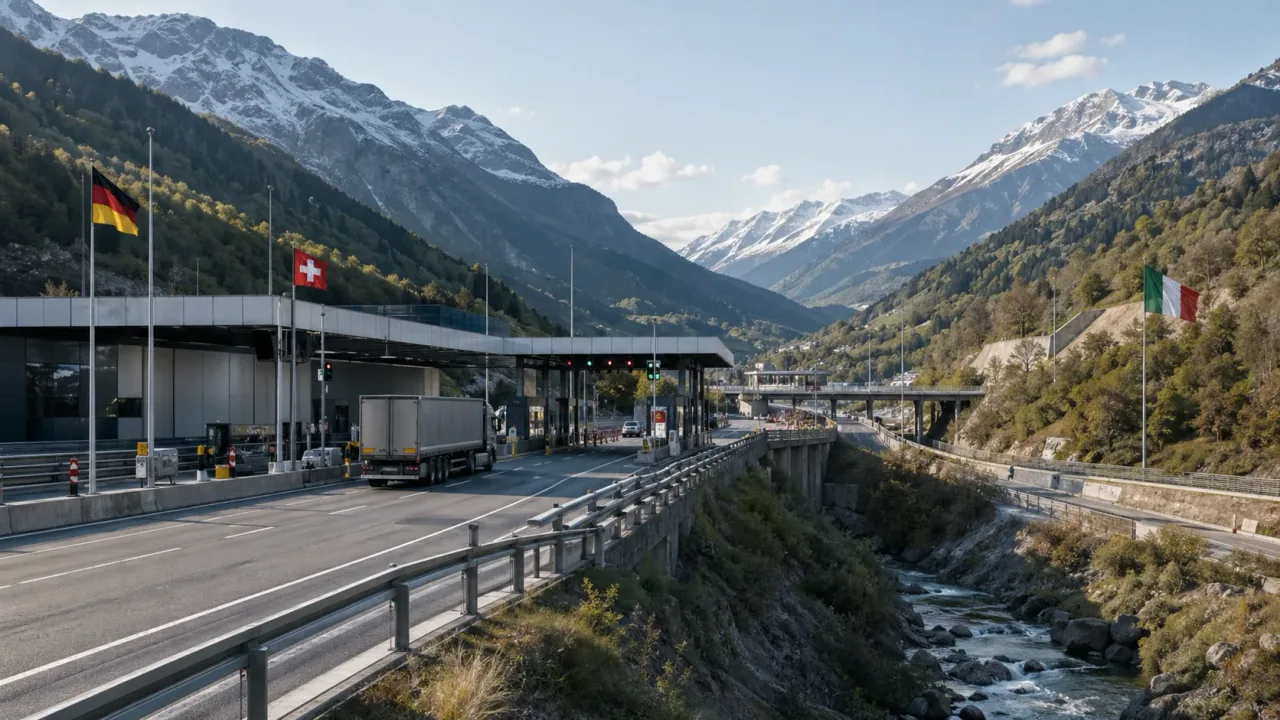
For Union goods moving by road freight from Germany through Switzerland to Italy, a T2 transit procedure in NCTS is normally opened. Before departure, the transit document, MRN, planned route, and guarantee must be in place. At eligible Swiss customs offices, the official Activ app can support the border process.
The route through Switzerland is often the most direct option for a truck travelling from Germany to Italy. The road movement is routine, but the customs transit depends on complete data and a properly opened NCTS movement.
T2 transit through Switzerland: How the procedure starts
Before a wheel starts turning, the transit procedure has to be opened. In most cases this is a T2 for Union goods. In practice, there are two ways to do this.
The convenient route: Authorized consignor
This is the option for anyone who wants to save time and nerves. The goods are loaded directly at your own site or at the logistics provider, and the customs declaration is handled fully electronically. After a short, predefined waiting period, the system automatically releases the transit document.
The driver receives the document on paper or on a tablet and can head straight for the motorway. No detour, no stress. This route is only available, however, with the relevant authorization as an authorized consignor.
The classic route: Pre-declaration
If authorized consignor status is not available, the LRN process remains. LRN stands for Local Reference Number. You or your customs service provider declare the goods online and generate a routing slip with an LRN.
The catch is that the truck still cannot cross the border with this alone. It first has to be presented at an inland or border customs office to receive the actual transit document. There, the goods are presented in the system, customs may take another look at the load, and the LRN finally becomes the proper transit document with the desired MRN (Movement Reference Number). Only then does the actual journey begin.
What information does the transit document need?
Whether the procedure starts through authorized consignor status or an LRN, the result is the accompanying transit document. Think of it as the passport for your freight. These are the key data points:
- MRN: The central barcode and identifier for the entire customs procedure.
- Parties: The consignor and consignee, including any EORI or other trader identifiers required for their roles.
- Route plan: The office of departure in Germany, the office of destination in Italy, and the intended offices of transit or border crossings.
- Goods details: Gross and net weights, number of packages, and the customs tariff number, meaning the HS code.
Transit through Switzerland to Italy is not magic, but it depends entirely on preparation.
Why does an NCTS movement normally need a guarantee?
Why is all of this necessary? A transit procedure suspends potential import duties and taxes while the goods are moving. An NCTS movement therefore normally needs a guarantee, although authorized waivers or reductions may be available under defined conditions.
Freight forwarders and customs brokers often use an NCTS comprehensive guarantee. The GRN (Guarantee Reference Number) identifies the guarantee being used. Based on the potential customs and tax liability, an amount is booked against the available guarantee reference amount.
The amount becomes available again once the transit procedure has been properly discharged and completed in the system. The truck's physical arrival at destination does not by itself guarantee immediate release of the amount.

Activ app: How the Swiss border process works
The free Activ app from the Swiss Federal Office for Customs and Border Security supports road transit movements at eligible Swiss customs offices. The core process has five steps:
- Open the Activ app and enter the vehicle registration and country of registration.
- Scan the barcodes on the T1 or T2 transit documents, or their MRNs.
- Start the journey in the app.
- When approaching a supported customs office, wait for the automated activation result.
- Follow the control result and any instructions shown at the border.
Activ can reduce waiting and counter processes, but it does not guarantee passage without stopping. It is not available at every customs office or for every type of goods or procedure. Printed transit documents must still travel with the vehicle. If there is a technical problem or a control instruction, the driver must contact customs staff on site.
Conclusion: Preparation makes the journey faster
Transit through Switzerland to Italy is not magic, but it depends entirely on preparation. Clean NCTS data is essential; at supported customs offices, the Activ app can additionally help reduce waiting and counter processes.
Teams that set up the process properly in advance save real money at the end of the day.
More articles
NCTS basics
Why transit powers global trade
February 7, 20264 min read
From e-dec to Passar
What matters now for Swiss imports
June 15, 20265 min read
Calculating customs value
Freight costs, free goods, and the Passar border value explained
July 16, 20267 min read