The NCTS basics: Why the transit procedure powers global trade

When people talk about international logistics, terms like transit, T1, and NCTS come up all the time. But before we go deeper, here is a small customs vocabulary check for your next call with the authorities: Officially, German customs usually does not speak of “transit”. The formal term is Versandverfahren, or transit procedure.
If you work with ATLAS in Germany, the customs IT system, you will search in vain for a module called “Transit”. The relevant module is officially called ATLAS Versand. But whether you call it transit or transit procedure, the meaning is the same. It is the system that keeps supply chains moving by allowing goods to cross borders without immediately paying duties at every checkpoint.
What exactly is NCTS?
NCTS stands for New Computerized Transit System. Do not let the word “New” fool you. The system has been the standard for years and acts as the digital brain behind transit procedures in Europe and its partner countries.
Thanks to NCTS, customs in Italy already knows that a truck from Hamburg is on its way before the driver has even seen the Alps. The process is paperless, well, almost, and happens in real time.
T1 or T2? The classic transit question
This is the everyday question in many customs offices: Which code belongs on the document? The decision matters because it defines the customs status of the goods.
- T1 (external transit procedure): This is used for non-Union goods. In practice, that means goods from third countries such as the United States, China, or the UK that have not yet been taxed or cleared through customs in the EU. The goods remain under customs supervision until they are officially cleared at their destination.
- T2 (internal transit procedure): This is used when Union goods, meaning goods already taxed within the EU, are transported through a non-EU country. A typical example is a shipment from Germany to Italy via Switzerland. The T2 proves to Italian customs: No worries, these goods come from the EU, so no import duties need to be charged again.
Whether you call it transit or transit procedure, the system is a highly connected digital chain.
The perfect interaction: Export meets transit
A transit procedure rarely stands alone. In most cases, the journey starts with an export declaration, known in Germany as the ABD.
The elegant part of the technology is this: When you open a transit procedure and reference the MRN of the previous export declaration, something very useful happens: the automatic closure.
As soon as the truck crosses the EU external border, for example on its way to Switzerland, and customs scans the barcode, the system in Germany receives the message: Goods have left. The export is officially completed, and you receive a clean tax-relevant proof for your accounting records at the push of a button.

Arrival in Germany: From transit to import
Now let us turn the process around. A truck arrives in Germany from Switzerland under a transit procedure. This is where operations become especially interesting, particularly for authorized consignees.
- Arrival: The truck reaches the warehouse. The authorized consignee reports the arrival digitally through ATLAS Versand.
- Permission to unload: Customs gives the green light to unload, usually after a short waiting period.
- Temporary storage: From this point on, the goods are in temporary storage. They are recorded in the system through a summary declaration.
- Closure: The goods must now be assigned to a customs-approved treatment. Most commonly, that means release for free circulation, the classic import process. The MRN of the transit procedure is written off in the import declaration. The circle closes, the file is complete, and the guarantee is released again.
The guarantee: No money, no movement
It is easy to forget that goods under transit represent potential revenue for the state. If the goods were to disappear on the road, customs would be missing the duties and taxes.
That is why every procedure needs a guarantee. Larger companies often use an NCTS comprehensive guarantee. In simple terms, it works like a credit line or bank guarantee deposited with customs.
Every time you open a procedure, part of that guarantee is reserved or blocked. Only when the goods are properly presented at the destination and the transit procedure is closed does the virtual money flow back into the pool, ready for the next truck.
Conclusion: Preparation makes the journey smoother
Whether you call it transit or transit procedure, the system is a highly connected digital chain. Anyone who understands the relationship between export, NCTS guarantees, and final import closure avoids expensive customs inquiries and saves a lot of operational stress.
Few things are more frustrating than a blocked comprehensive guarantee because someone at the destination forgot to properly arrive the truck in the system. So keep your master data clean, keep an eye on ATLAS, and safe travels.
More articles
ATLAS data check 2026
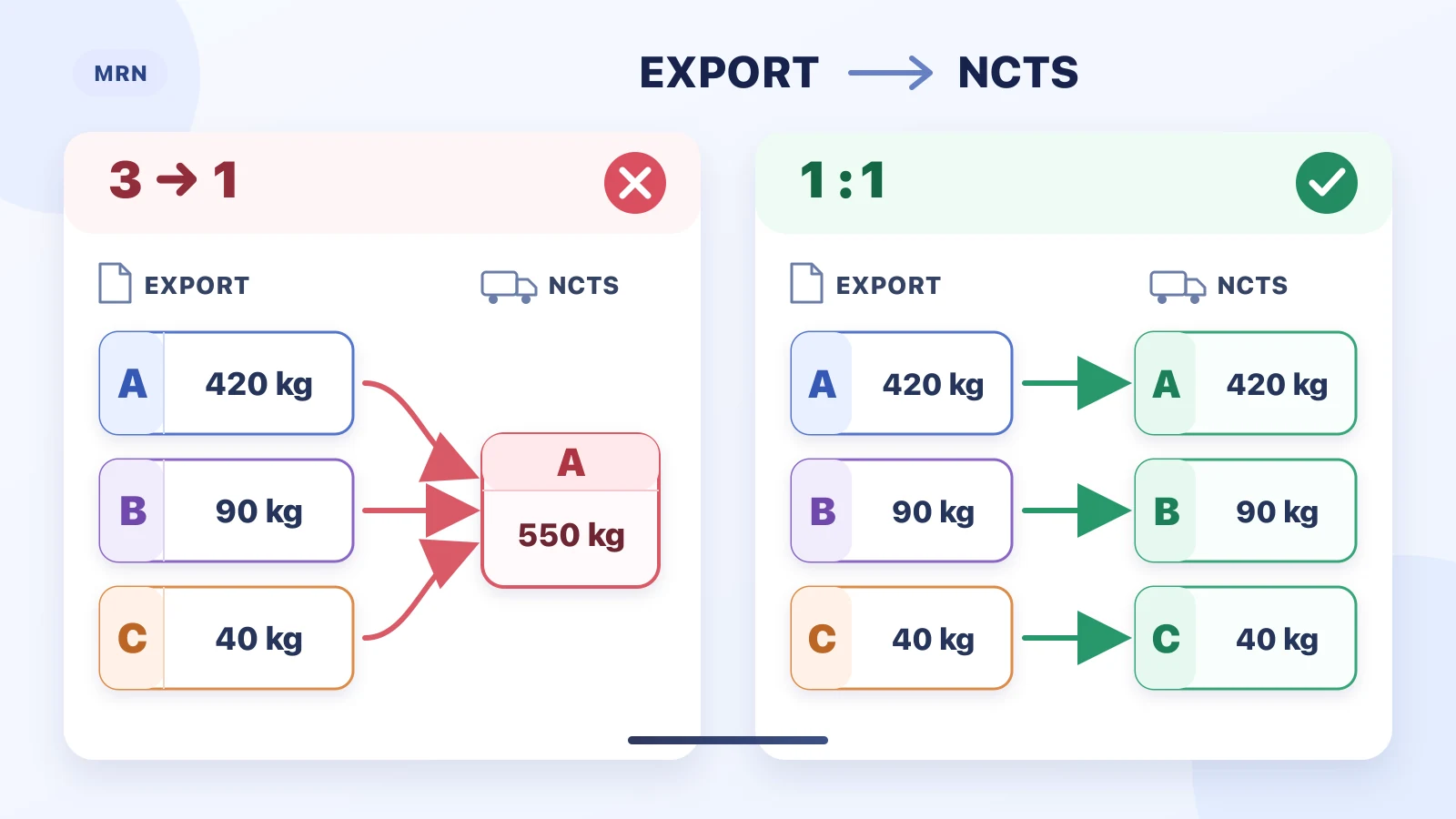
When export and transit data do not match
August 17, 20268 min read

EAD, MRN & proof of exit
The four stages of the export procedure explained clearly
July 27, 20268 min read

Swiss transit to Italy
Prepare T2, MRN, and the Activ app correctly
March 3, 20265 min read