EUDR customs declarations – commodity and document codes from 2026

From 30 December 2026, businesses releasing covered goods for free circulation or exporting them must account for the EU Deforestation Regulation (EUDR). Document codes such as C716 indicate whether a due diligence statement is available or which exemption is being claimed. The correct entry depends on the product, the procedure and the company's role. The European Commission's current TARIC working document sets out the codes for these situations. European Commission, TARIC working document, revision of 23 September 2026.
Three pieces of information therefore belong together when preparing a declaration. Which goods item is covered? Who holds the EUDR obligations for that trade flow? Which statement or substantiated exemption belongs to the item? Businesses can pass these details to Declarium with their shipment data.
Editorial status as of 13 November 2026. This article reflects the revised application dates, the amended Annex I and the TARIC codes in the September 2026 revision.
When do EUDR obligations apply at customs?
The EUDR entered into force on 29 June 2023. Application of its main obligations was postponed. Three dates matter for operational preparation. European Commission, EUDR application dates.
| Date | Significance |
|---|---|
| 30 December 2026 | General application date, particularly for large and medium-sized operators, downstream operators and traders |
| 30 June 2027 | Later application for the micro and small businesses covered by Article 38(3) that were already established as such by 31 December 2024 |
| 30 December 2027 | Application to the products newly added by Delegated Regulation (EU) 2026/2102 |
The later deadline for small businesses has an important limitation. It does not cover products already listed in the Annex to the previous EU Timber Regulation (EUTR). Businesses that qualify for the transition use Y141 where the relevant EUDR customs measure applies. The code is available for this purpose up to and including 29 June 2027. European Commission, TARIC working document, Y141 and footnote TM985.
What changed in Annex I?
Delegated Regulation (EU) 2026/2102 was published on 17 September 2026 and entered into force the next day. It removes certain goods, clarifies numerous product descriptions and adds further products with a later application date. Regulation (EU) 2026/2102, official publication.
| Change | Affected headings or products |
|---|---|
| Removed | Cattle hides and leather under ex 4101, ex 4104 and ex 4107, conveyor and transmission belts under ex 4010, and other vulcanised rubber articles under ex 4016 |
| Narrowed | Under ex 4012, new tyre treads under ex 4012 90 30 remain covered. Soya beans are limited to 1201 90 00, excluding seed. The wooden seating entry is made more specific, excluding aircraft and motor-vehicle seats. |
| Added from 30 December 2027 | Frozen cattle tongues under ex 0206 21 00, coffee extracts under 2101 11 00, and further oil-palm derivatives and products made from them |
The new oil-palm entries include ex 1516 20, ex 1518 00, ex 1520 00, ex 2905 16, ex 2905 17 00, ex 2905 19 00, ex 2915 39, ex 2916 15, ex 2916 19 10, ex 2921 19, ex 2923 90 00, ex 2924 19 00, ex 3401 11 00, ex 3401 20, ex 3824 99 and ex 3907 29. The product description determines the scope of each entry. Annex to Regulation (EU) 2026/2102.
The correct EUDR code depends on the goods, the trade flow and the company's role.
Which commodity codes are covered?
The EUDR covers seven commodities and the products listed in Annex I. “ex” restricts coverage to the described part of a tariff heading. The commodity code therefore needs to be checked alongside the material and product description.
The following overview summarises the entries for the general application date. The additions taking effect at the end of 2027, listed above, require separate consideration. Descriptions are shortened, with the complete boundaries set out in Annex I. EUDR, Annex I in the consolidated text.
| Commodity | Headings and subheadings | Typical products |
|---|---|---|
| Cattle | ex 0102, ex 0201, ex 0202, ex 0206 10, ex 0206 22, ex 0206 29, ex 1602 50 | Live cattle, meat, certain edible offal and prepared beef |
| Cocoa | 1801, ex 1802, 1803, 1804, 1805, 1806 | Cocoa beans, shells, cocoa paste, cocoa butter, cocoa powder and chocolate |
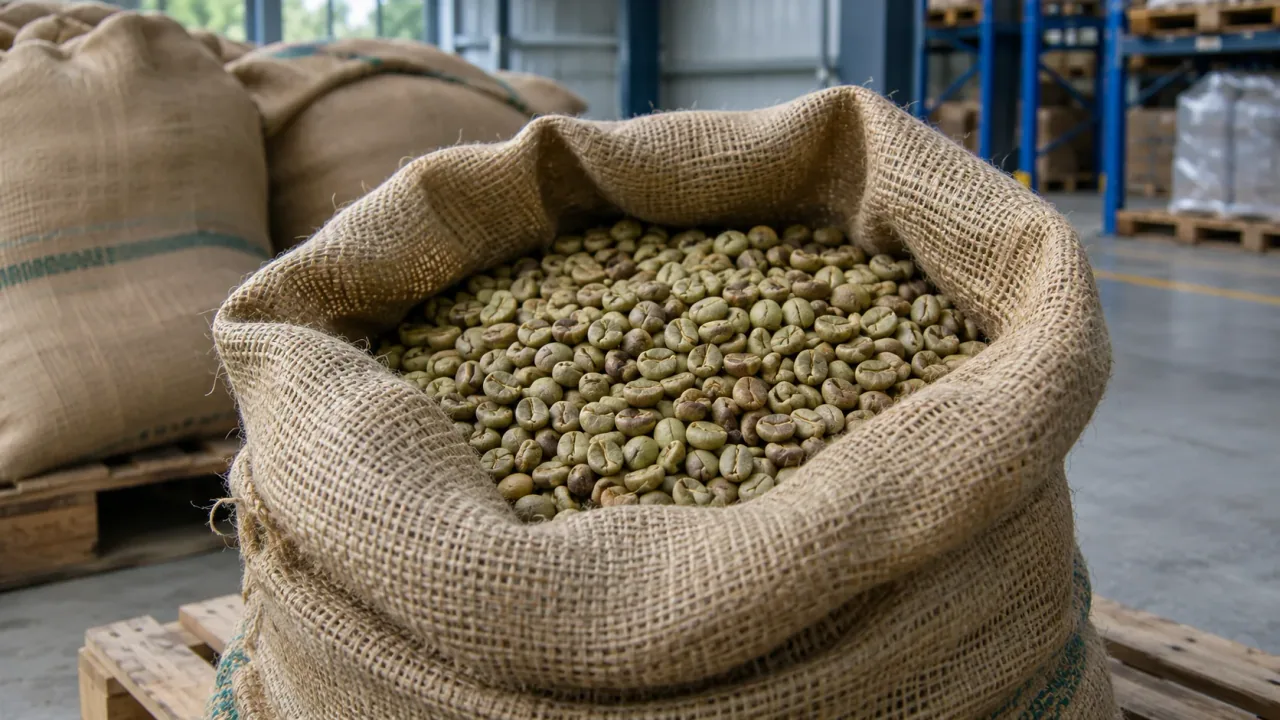
| Coffee | 0901 | Coffee, including roasted or decaffeinated coffee and the other products specified under this heading |
| Oil palm | ex 1207 10 00, ex 1511, ex 1513 21, ex 1513 29, ex 2306 60 00, ex 2905 45, ex 2915 70, ex 2915 90, ex 3823 11 00, ex 3823 12 00, ex 3823 19, ex 3823 70 00 | Palm nuts and kernels, oils, oilcake and certain chemicals derived from oil palm |
| Rubber | ex 4001, ex 4005, ex 4006, ex 4007, ex 4008, ex 4011, ex 4012 90 30, ex 4013, ex 4015, ex 4017 | Certain natural rubber products, compounds, tyres, treads, inner tubes, clothing and hard rubber |
| Soya | 1201 90 00, 1208 10, 1507, 2304 | Soya beans excluding seed, soya flour, soya oil and oilcake |
| Wood | ex 4401 to ex 4421 | The specified wood products, including fuel wood, sawn wood, panels, boxes and builders' woodwork |
| Wood | ex Chapter 47 and ex Chapter 48 | Covered pulp, paper and paperboard, subject to the relevant material and recycling exclusions |
| Wood | ex 9401 31 00, ex 9401 41 00, ex 9401 61 00, ex 9401 69 00, ex 9401 80 00, ex 9401 91 90, ex 9403 30, ex 9403 40, ex 9403 50, ex 9403 60, ex 9403 91, ex 9406 10 00 | Certain wooden seats, other wooden furniture and parts, and prefabricated wooden buildings |
For rubber, the relevant material comes from Hevea brasiliensis, and for oil palm from Elaeis. Bamboo and rattan fall outside the wood definition for this purpose. Packaging needs particular attention. A new wooden pallet traded as a product can be covered. Packaging used to support, protect or carry other goods benefits from the relevant exclusions. For reusable packaging, these apply from its use for that purpose onwards. Regulation (EU) 2026/2102, explanations concerning commodities and packaging.
Before filing, businesses check the current measure for the specific commodity code, trade direction and relevant date in TARIC or Germany's electronic customs tariff, EZT. TARIC results for a future date may still be incomplete. European Commission TARIC consultation.

Which EUDR document codes are available?
The current overview contains 15 document codes. C-codes identify a statement or a prescribed reference. Y-codes identify the exemption being claimed. The short descriptions below follow the TARIC working document of 23 September 2026. European Commission, document codes and conditions.
| Code | Situation | Associated reference |
|---|---|---|
| C716 | Due diligence statement for the relevant import or export | Statement reference number |
| C717 | Simplified declaration by an eligible micro or small primary operator | Simplified declaration identifier |
| C718 | Export or re-import of certain goods first placed on the EU market during the transitional period | Conventional reference 99EU9999999999 |
| C720 | Re-import by a non-SME downstream operator registered in the information system | Associated statement or permissible conventional reference |
| C725 | Re-import by an SME downstream operator not registered in the information system | Associated statement or permissible conventional reference |
| Y129 | Goods outside EUDR scope within an affected tariff heading | No statement reference |
| Y132 | Products produced before 29 June 2023 under Article 1(2), subject to the timber transitional provisions | No statement reference |
| Y133 | Applicable exclusions for used goods, waste and recycled products | No statement reference |
| Y141 | Eligible micro and small businesses within the transition ending on 29 June 2027 | No statement reference |
| Y142 | Non-commercial consumer-to-consumer consignments | No statement reference |
| Y187 | Qualifying samples of negligible value and quantity, and goods for examination, analysis or testing | No statement reference |
| Y188 | Exports by SME downstream operators not registered in the information system | No statement reference |
| Y190 | Packaging exclusions specified in Annex I | No statement reference |
| Y191 | Specified exclusions for medicinal-product manufacturing, correspondence and accompanying marketing or information material | No statement reference |
| Y196 | Exports by non-SME downstream operators registered in the information system | No statement reference |
The conditions attached to an exemption form part of the assessment. For example, the recycling exclusion for goods made from recovered material generally requires them to consist entirely of qualifying material. A recycled content percentage or a product supplied free of charge alone does not establish the relevant exemption. EUDR, explanatory provisions in Annex I.
Who needs their own due diligence statement?
A business placing a covered product on the EU market for the first time, for example through an import, is generally an operator with its own due diligence obligations. A supplier's reference alone therefore leaves the question of which statement the business needs for its own import unresolved. Downstream operators and traders have different obligations. C717 and the simplified declaration are available only to the legally defined group of micro and small primary operators. The conditions include establishment in a country classified as low risk and commodities they produce themselves in that country. Regulation (EU) 2025/2650, changes to business roles and Article 4a.
Exports by downstream operators use Y188 or Y196. Their re-imports use C725 or C720. Where an upstream statement reference is unavailable for a qualifying re-import, the conventional reference 22EU2222222222 can be used. This requires evidence that the commodity or product was previously on the EU market. The transitional case C718 has its own reference, 99EU9999999999. The TARIC working document describes the relevant period as running from 30 June 2023 until the EUDR application date. Swedish Forest Agency, guidance on export, re-import and the transitional period.
How do you select the correct code for each item?
The following sequence helps teams prepare the declaration.
- Determine product scope. Check the commodity code, product description, material and application date together.
- Substantiate exemptions. Document, for example, the synthetic material, a qualifying sample purpose or eligibility for the small-business transition.
- Record the role in each trade flow. Importers, primary operators and downstream exporters can have different statement obligations. The same company can hold different roles in different transactions.
- Assign the code and reference. Link the due diligence statement, simplified declaration or permissible conventional reference to the specific goods item.
- Check the customs measure. Before filing, confirm that the code and details match the procedure and the current TARIC or EZT measure.
A material example illustrates this assessment. A rubber compound under ex 4005 can require different treatment depending on its material composition. To use Y129, the customs team needs reliable product information, such as a supplier specification. The generic description “rubber compound” provides too little information for that decision.
The checked details belong to the relevant goods item, within the document or reference data required by the customs procedure. A reference in an email or as invoice free text becomes operationally usable once it is assigned to the correct item. German declarations follow the current ATLAS requirements and code lists. European Commission, TARIC working document.
How does Declarium support EUDR customs processing?
Declarium handles agreed import and export declarations in Germany and combines data intake with customs expertise. Customers provide shipment and item data together with the associated EUDR codes, references and supporting evidence. Declarium prepares the information for the agreed customs process, resolves queries with the customer and returns status, customs references and documents. Our page on German customs clearance with ATLAS import and AES export describes the service scope.
You can provide the required EUDR codes and references to Declarium together with the other shipment details.
The due diligence statement originates in the EU information system. EUDR obligations and the evidence for a claimed exemption remain with the responsible business. The authorities carry out their checks and release the goods in the subsequent customs procedure.
What should businesses prepare now?
Start with the item master and add shipment- or batch-level details where information can change.
- Update classification. Check existing products against the amended Annex I and record the later application date for newly added products.
- Document material composition. For ex-headings, retain the relevant composition details and supplier evidence.
- Assign responsibilities. Purchasing, EUDR owners and customs teams need to know who obtains or submits the statement and who approves the information.
- Link references to shipments. Record the statement or exemption applying to each affected item. Preserve the full mapping when several references are involved.
- Agree how to hand over the information. Ensure that the required EUDR codes and references reach the customs team with the shipment documents.
Declarium also supports commodity-code preparation using product and document data. A reliable product description then helps the assessment of EUDR scope. Our automated goods classification solution explains this workflow.
For the operational start, the product, business role, EUDR evidence and customs declaration need to align. Item-level data submission lets the customs team reuse these details within the ongoing shipment process. Our automated customs clearance solution describes how Declarium connects data intake, checks and feedback.
Sources
- European Commission – EUDR overview and current application dates
- EUR-Lex – Consolidated EUDR text with Annex I, 18 September 2026
- EUR-Lex – Regulation (EU) 2025/2650 on dates and business obligations
- EUR-Lex – Delegated Regulation (EU) 2026/2102 on product scope
- BOE – Official publication of Regulation (EU) 2026/2102
- European Commission – EUDR TARIC working document, revision 1 of 23 September 2026
- Swedish Forest Agency – Export, re-import and conventional references, updated 19 October 2026
- European Commission – TARIC consultation
More articles
ATLAS data check 2026
When export and transit data do not match
August 17, 20268 min read

NCTS basics
Why transit powers global trade
February 7, 20264 min read

E-commerce customs reform 2026
The €3 duty, IOSS and the path to the EU Data Hub
October 8, 20268 min read